Medica OS
The operating system for modern medical facilities
 View website
Overview
A hospital doesn't run on one screen. It runs on a front desk, a ward, a pharmacy counter, a lab bench, a billing office, and a roster that never stops changing. Most facilities hold that together with a patient records system, a separate billing tool, a WhatsApp group for shift swaps, a spreadsheet for bed status, and a paper folder for policies.
Medica OS started from one question: what happens when a nurse, a pharmacist, a lab tech, and an admin all open the same system and see the same truth, updated in real time?
The challenge
Every department in a hospital keeps its own record of the same patient, and those records rarely agree with each other. A few problems came up again and again during research.
- Fragmented tools: Facilities stitch together a patient records system, a billing spreadsheet, a pharmacy ledger, and a messaging app. Each tool has its own login, its own data, and its own version of what happened to a patient today.
- No real-time bed visibility: Front desk staff call the ward to check if a bed is free. By the time the call ends, the bed status has often changed again.
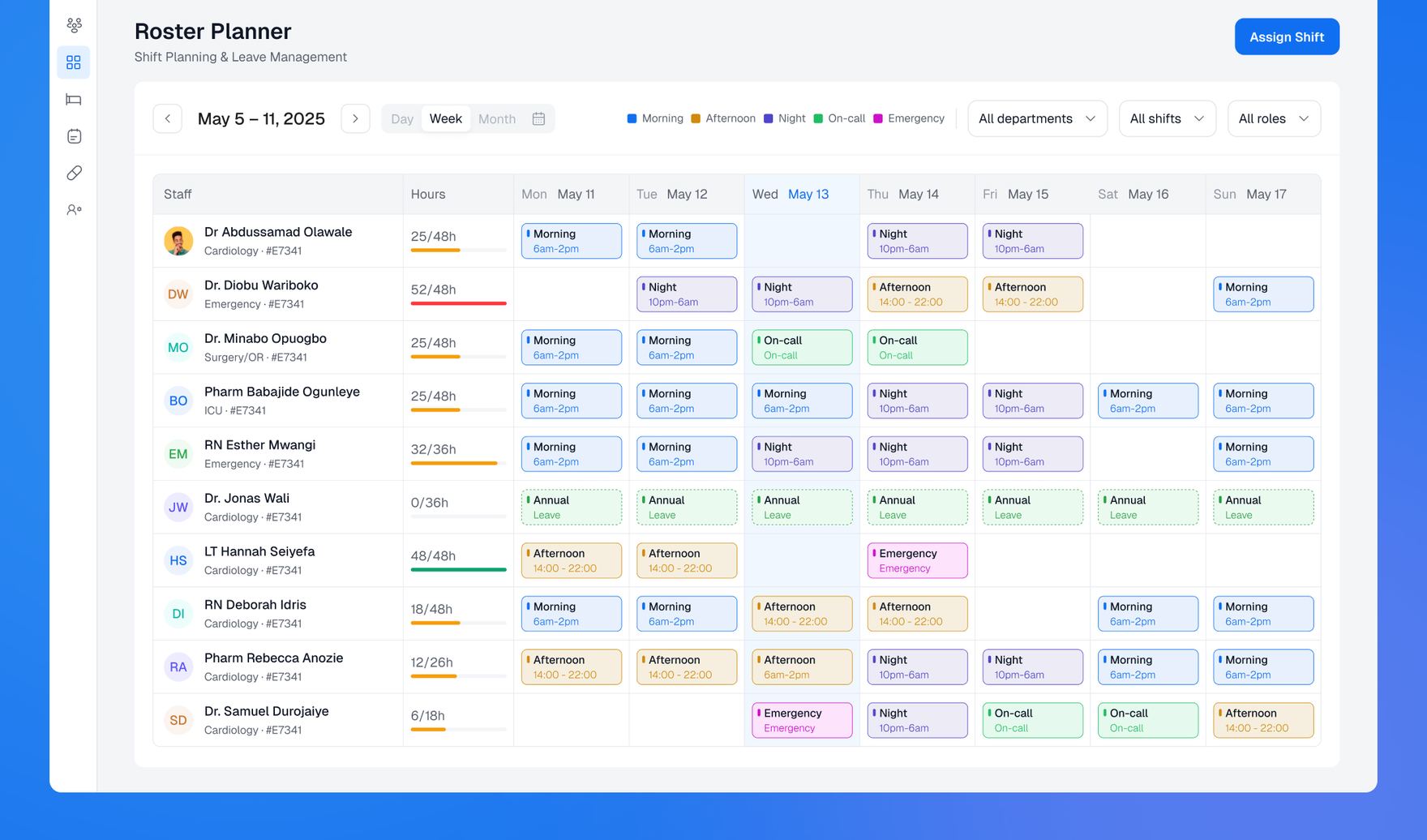
- Manual rostering: Shift assignments live in a spreadsheet or a printed sheet pinned to a wall. Swaps happen over the phone, and nobody tracks whether a nurse just worked 52 hours in a week.
- Pharmacy blind spots: Stock counts run low without warning. A drug expires on a shelf because no one flagged it in time. Prescriptions get filled from a paper slip that can be misread.
- Billing disconnected from care: A patient gets discharged before their invoice is settled, or a lab result comes back before the insurance claim clears. Finance and clinical teams work from different numbers.
- Audit gaps: Regulators and internal auditors need to know who did what and when. Paper trails and disconnected logins make that hard to reconstruct after the fact.
- Slow onboarding: New staff learn the system by shadowing a colleague, because policies and how-to guides live in someone's head or a shared drive nobody opens.
Research & insights
Building a single system for a hospital meant studying how other industries solve coordination problems at scale, then testing which patterns fit clinical work.
- Traditional EHR platforms (Epic, OpenMRS, Helium Health) set the baseline for a patient chart: vitals, medications, allergies, lab results, immunizations. Most stop at the chart and leave billing, pharmacy, and staffing to separate software.
- Property and facility management tools: Hotel booking systems solve a problem close to bed management: a physical unit moving between available, occupied, reserved, and cleaning states in real time. That status model carried over almost directly into ward operations.
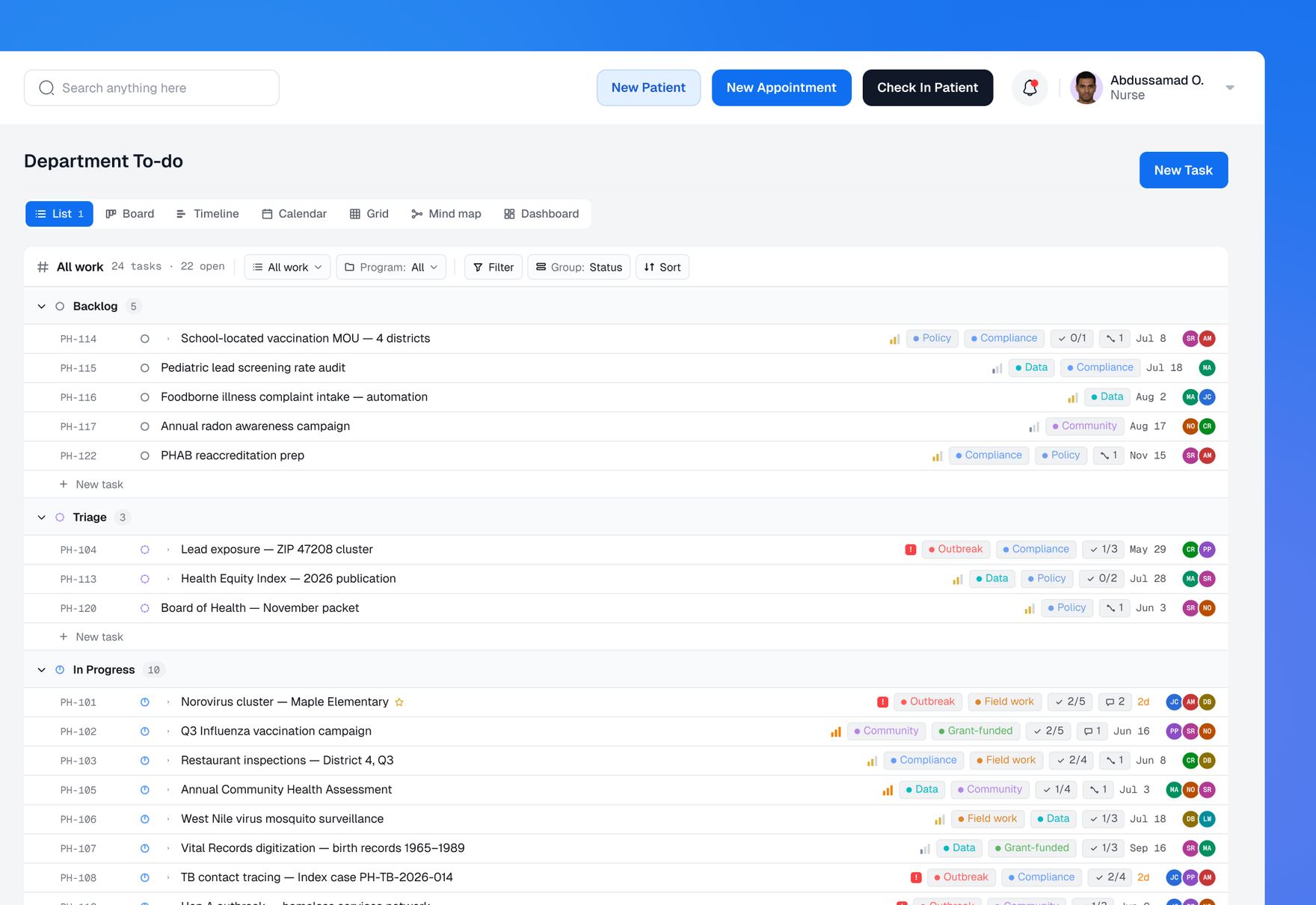
- Project management tools (ClickUp, Linear) brought the rigor of an engineering sprint board to department to-dos: backlog, triage, in-progress, priority flags, ownership. Clinical teams juggle outbreak response, compliance audits, and community programs the same way a product team juggles features and bugs.
- Fintech dashboards shaped how billing needed to answer questions fast: what's outstanding, what's pending insurance, what's overdue. They turn raw transactions into a handful of numbers a non-accountant can read at a glance.
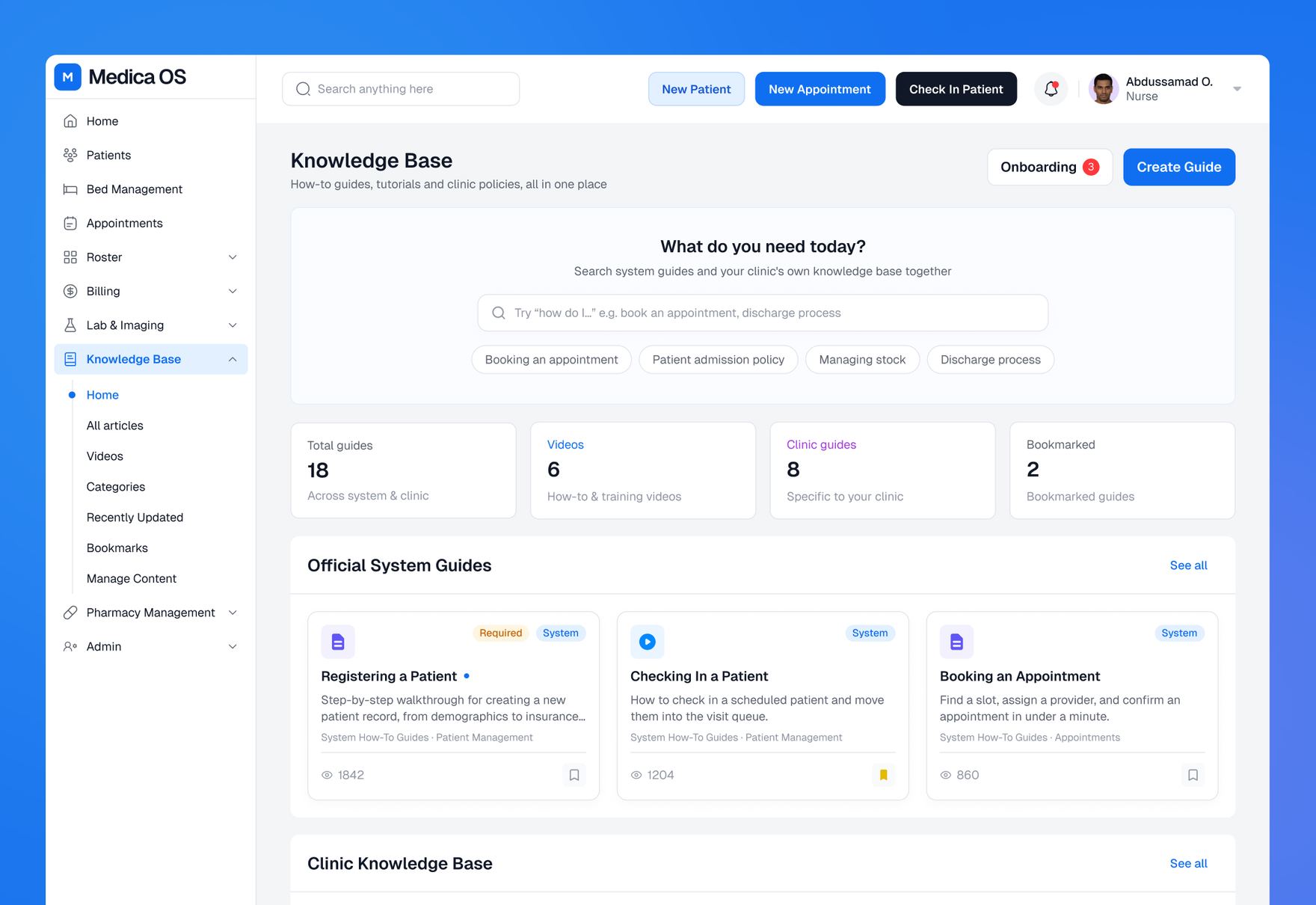
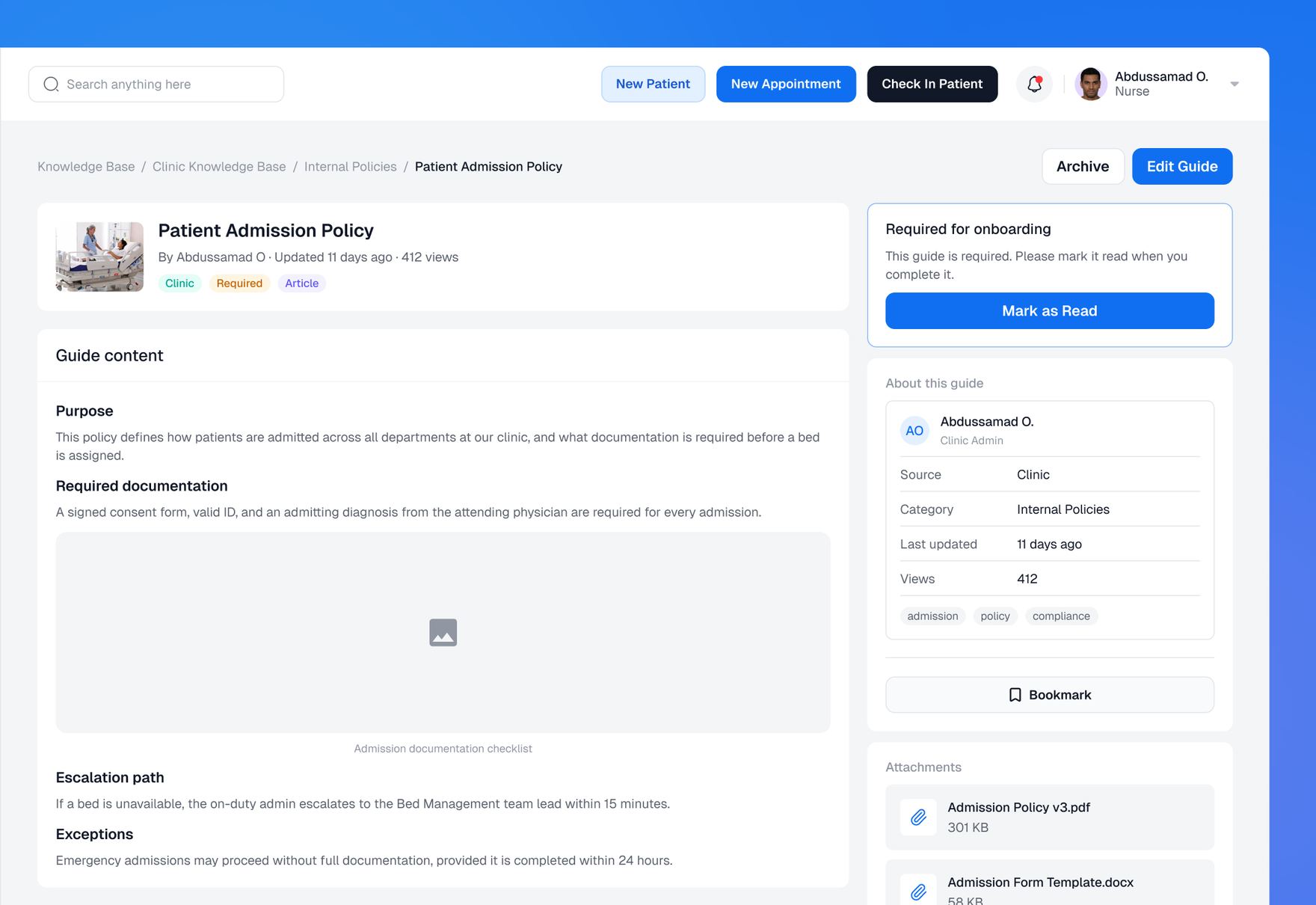
- Learning management systems informed how the knowledge base separates required reading from optional guides, and tracks what a new hire has actually completed versus what's just sitting on a shelf.
These references shaped one design principle: every module should feel like a specialist tool, but pull from the same patient, schedule, and inventory data underneath.
The solution
Medica OS brings a hospital's departments onto one platform, built around a handful of core workflows.
1. One patient record, every department
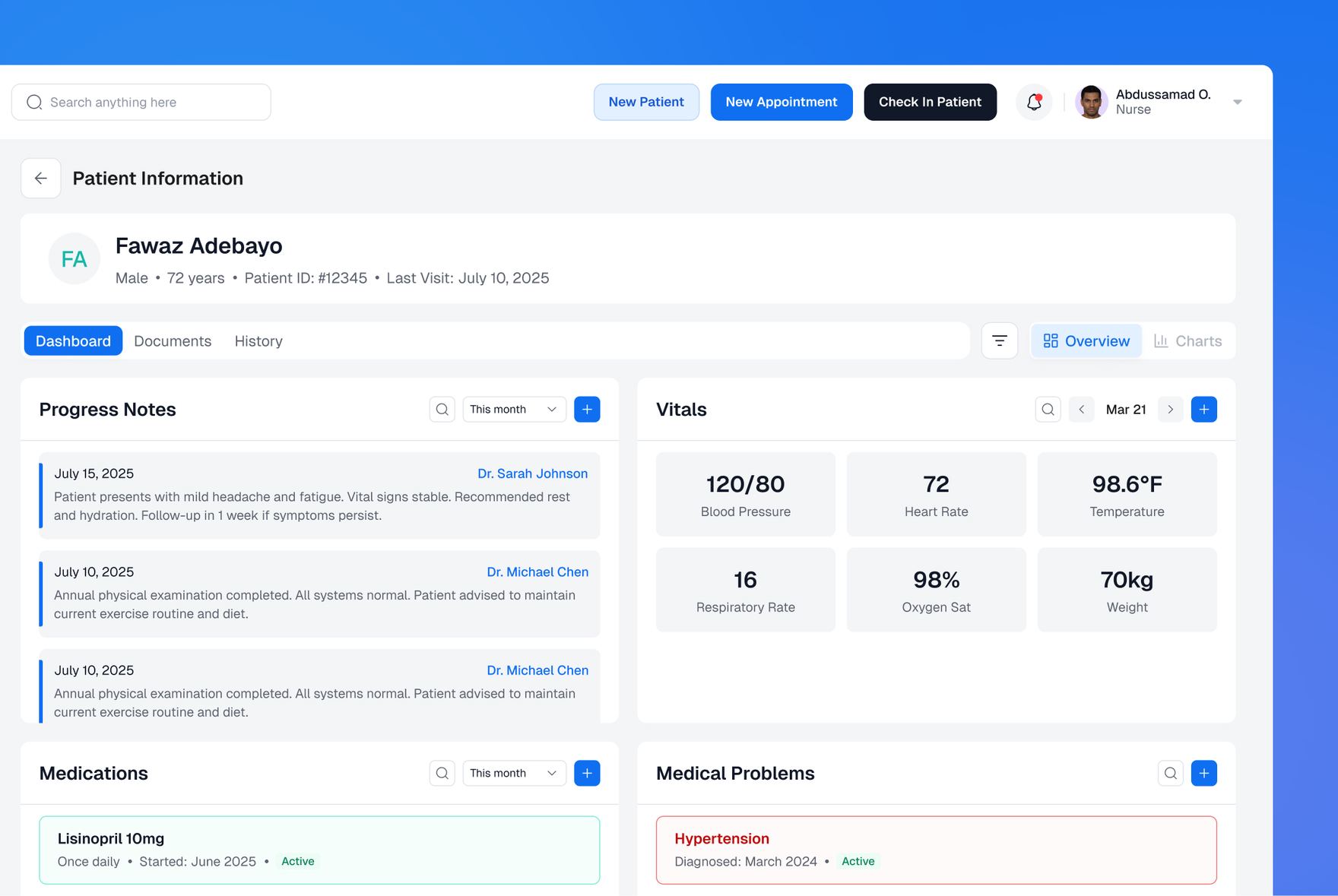
- Full clinical picture: Vitals, progress notes, active medications, diagnosed conditions, allergies, immunizations, and lab results sit on a single dashboard.
- Real-time updates: A nurse charting vitals and a doctor reviewing a diagnosis work off the same record, updated the moment either one saves a change.
2. Facility operations, live
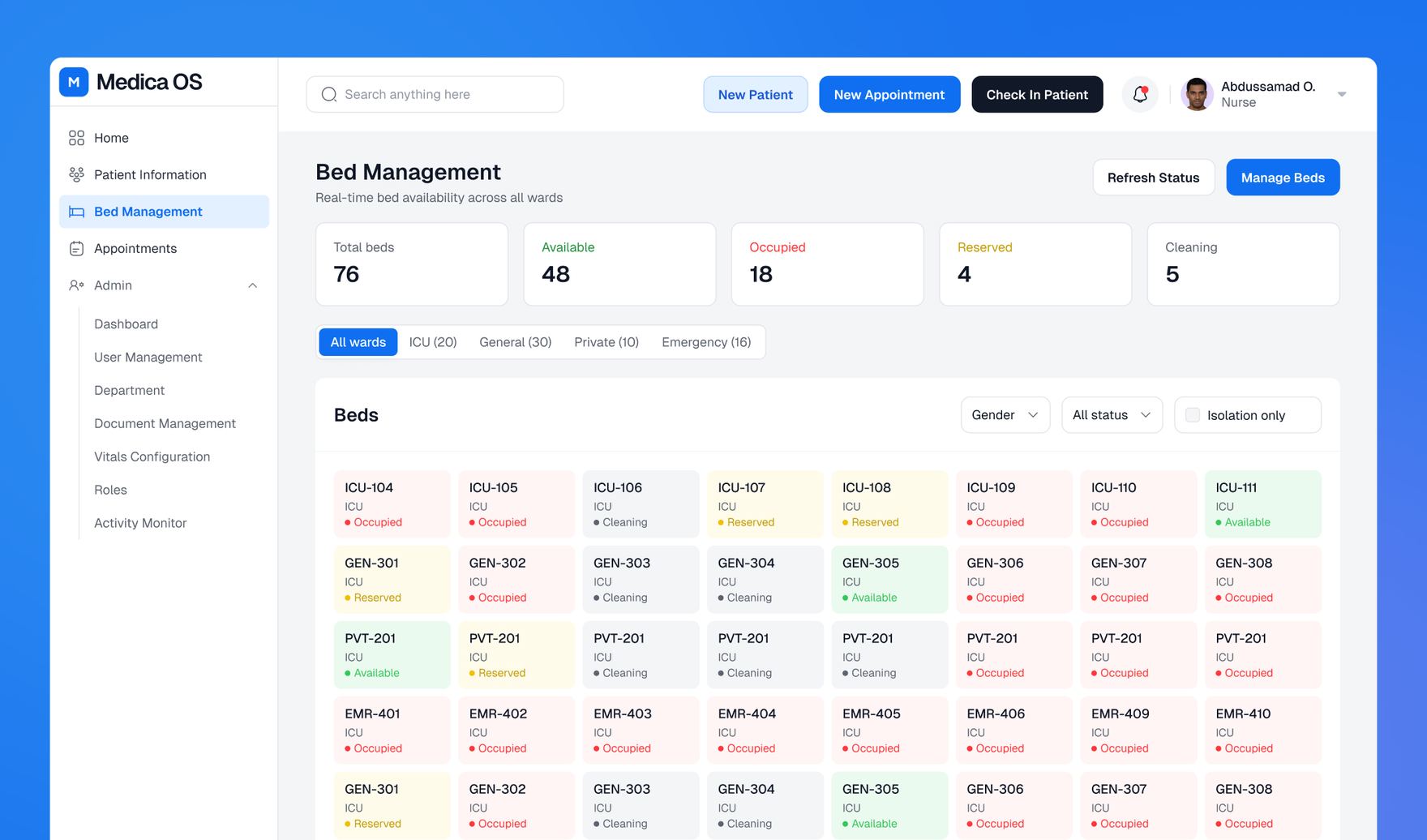
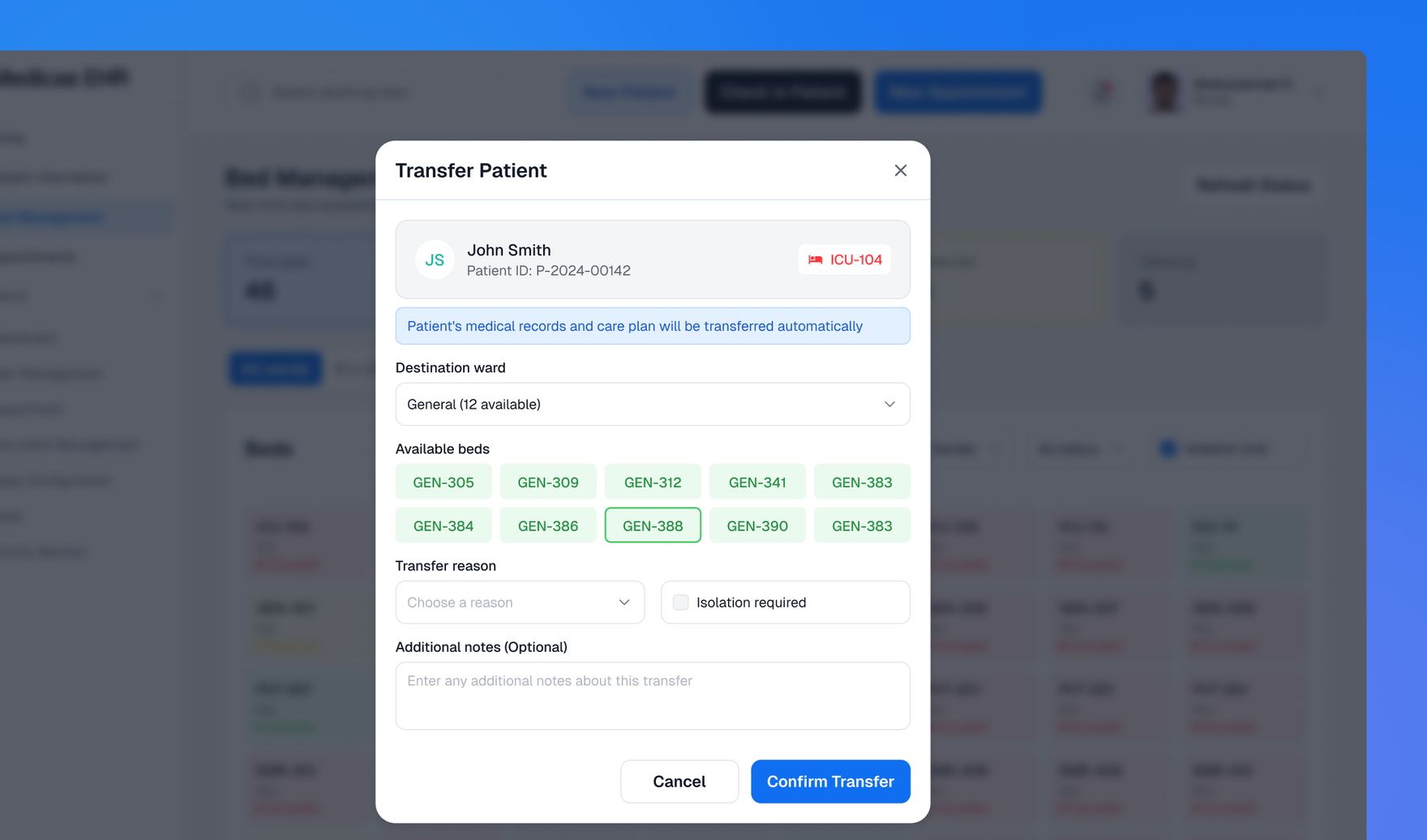
- Bed board: Wards show available, occupied, reserved, and cleaning status in real time, filterable by gender and isolation needs, so staff place patients without a call to the ward.
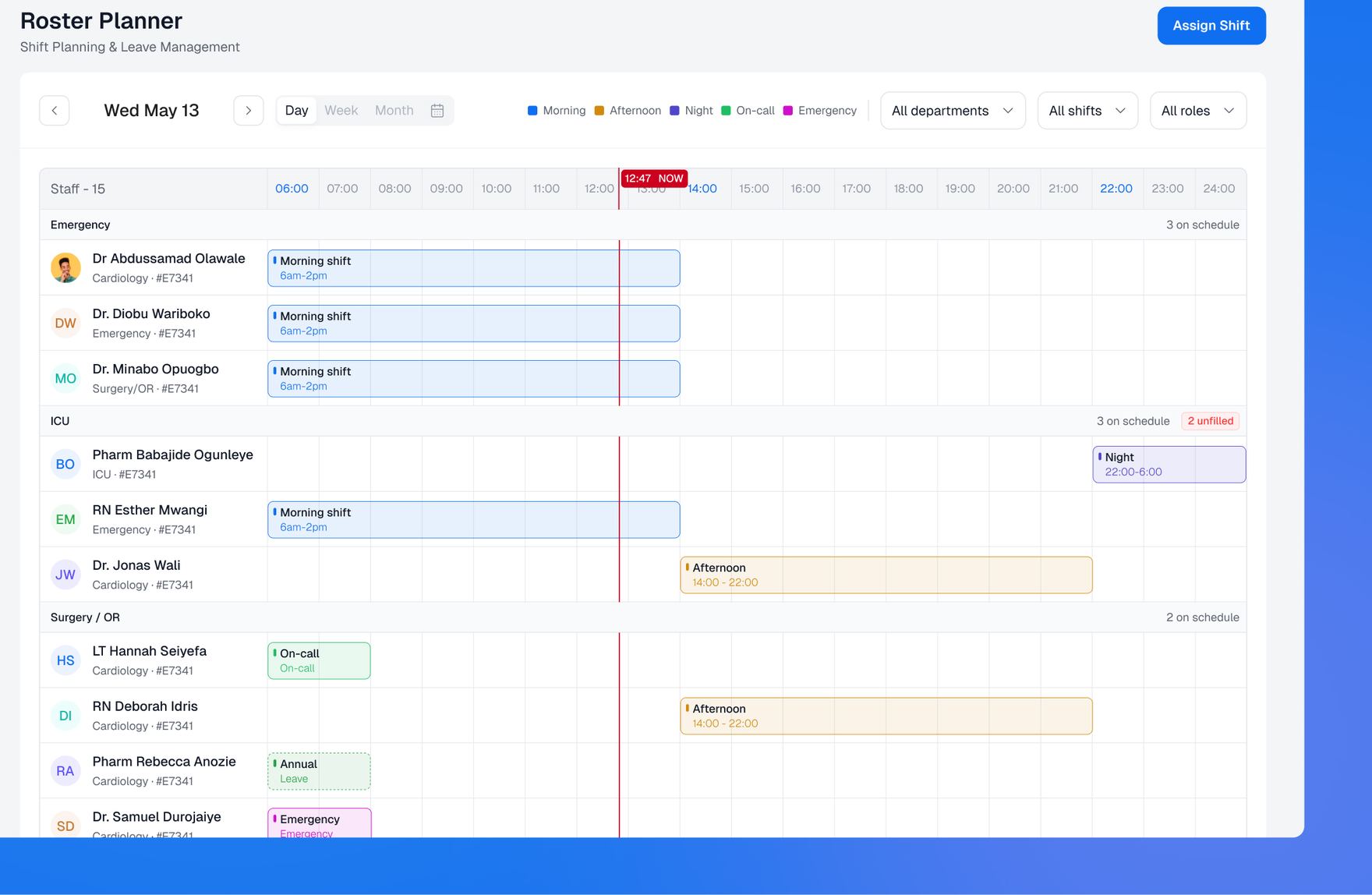
- Shift planning: A weekly roster tracks morning, afternoon, night, on-call, and emergency shifts, with hour totals and an overtime warning per staff member.
- Mobile clock-in: Staff carry their schedule on their phone and clock in with one tap when a shift starts.
3. Patient journey: registration to consult
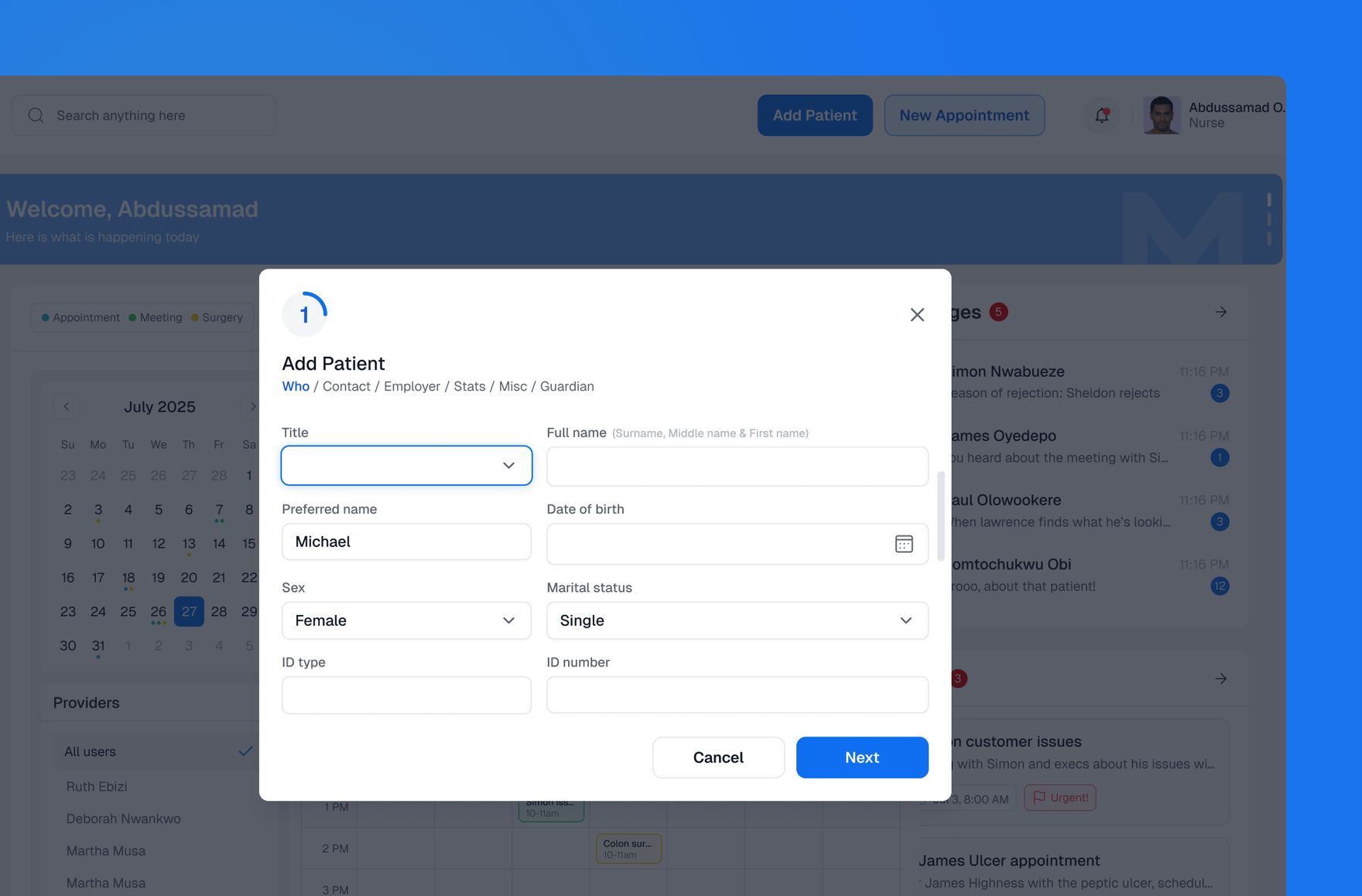
- New record, one intake: Registration walks front desk staff through identity, contact, employer, demographic, and next-of-kin details in a single guided flow, so a patient exists as one record before their first appointment is even booked.
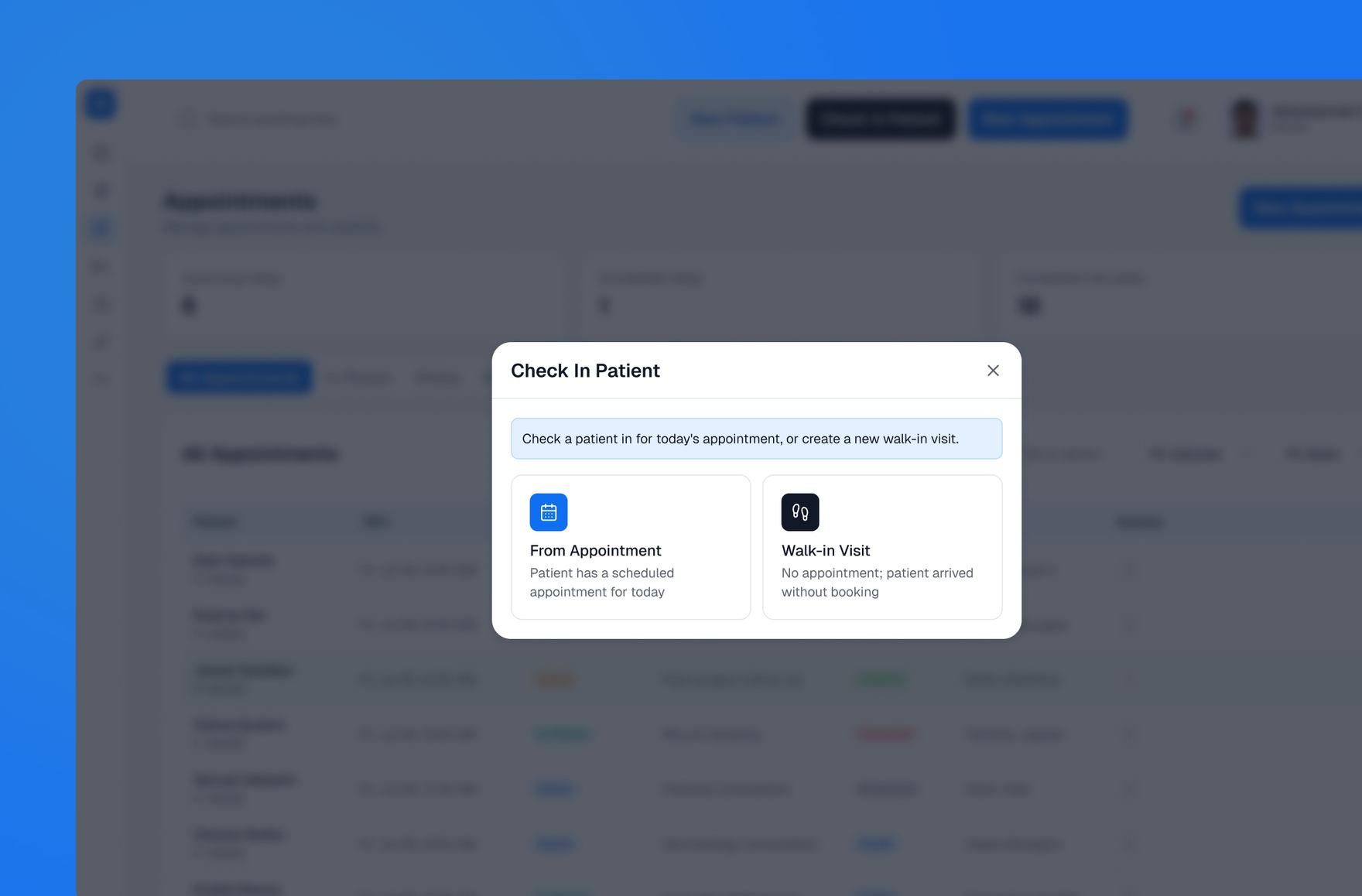
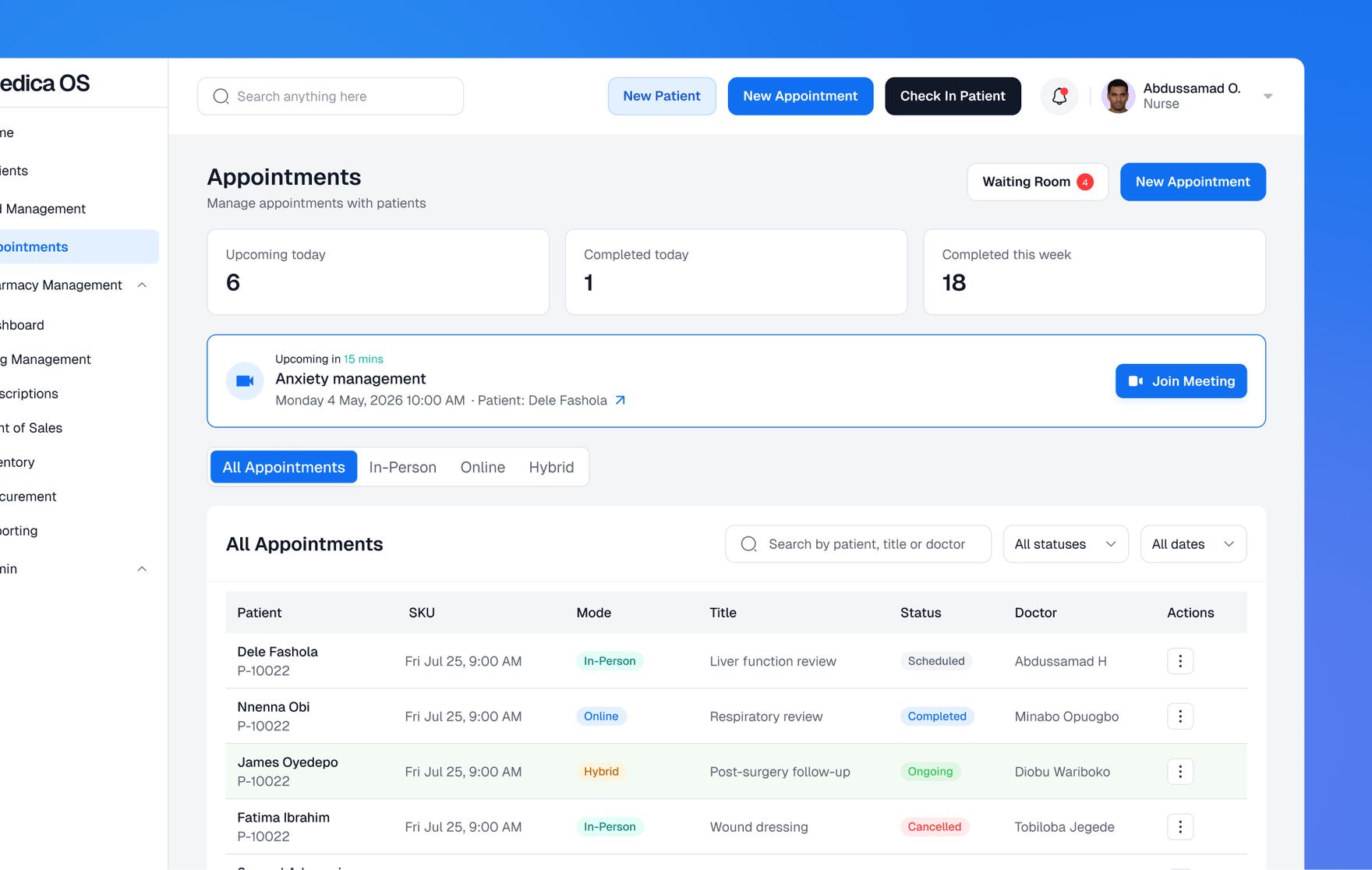
- Two check-in paths: Front desk staff pull up a patient with a scheduled appointment or register a walk-in, and both land in the same queue.
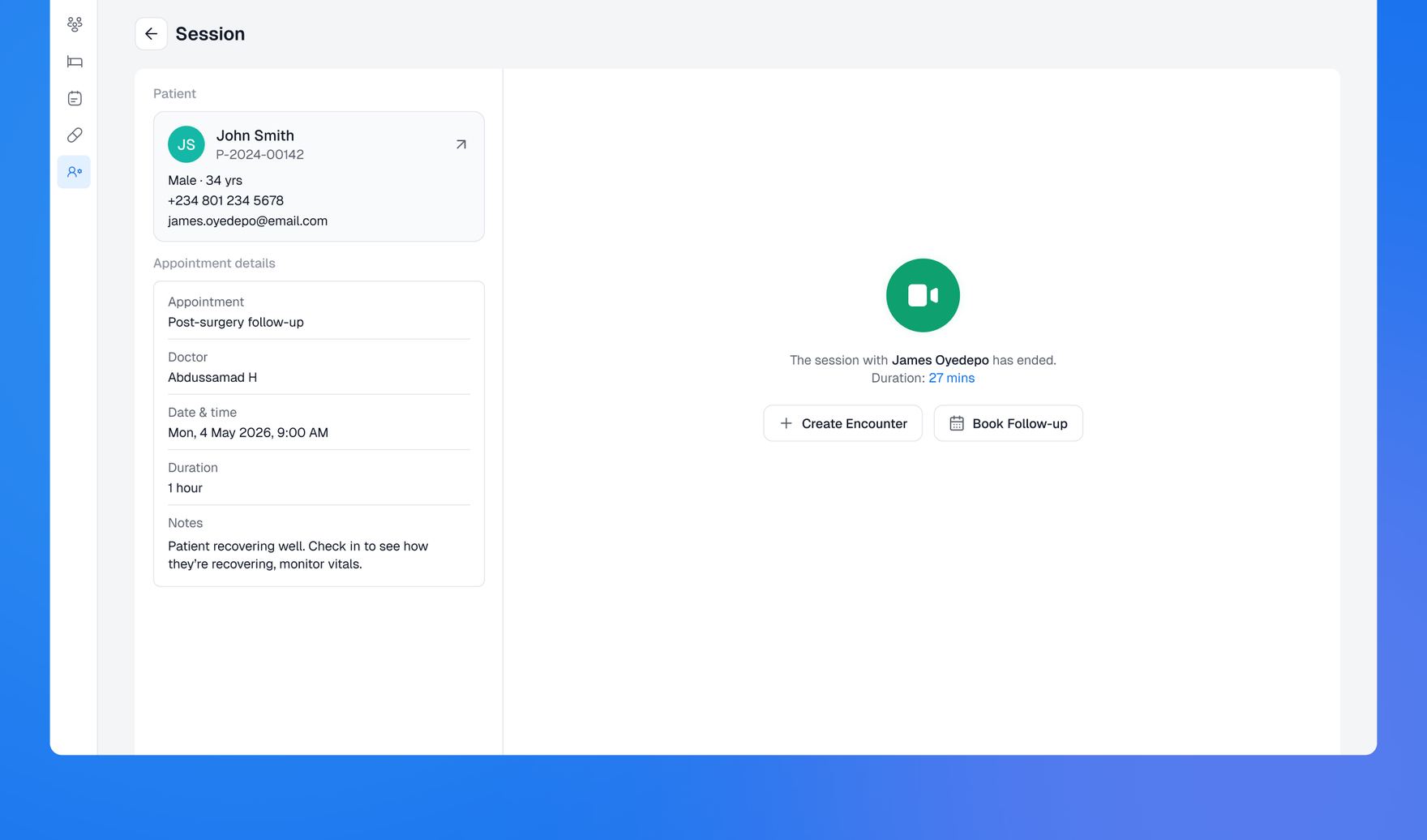
- Built-in telehealth: Video sessions launch from the appointment record itself, and once a call ends, the doctor creates an encounter or books a follow-up without leaving the screen.
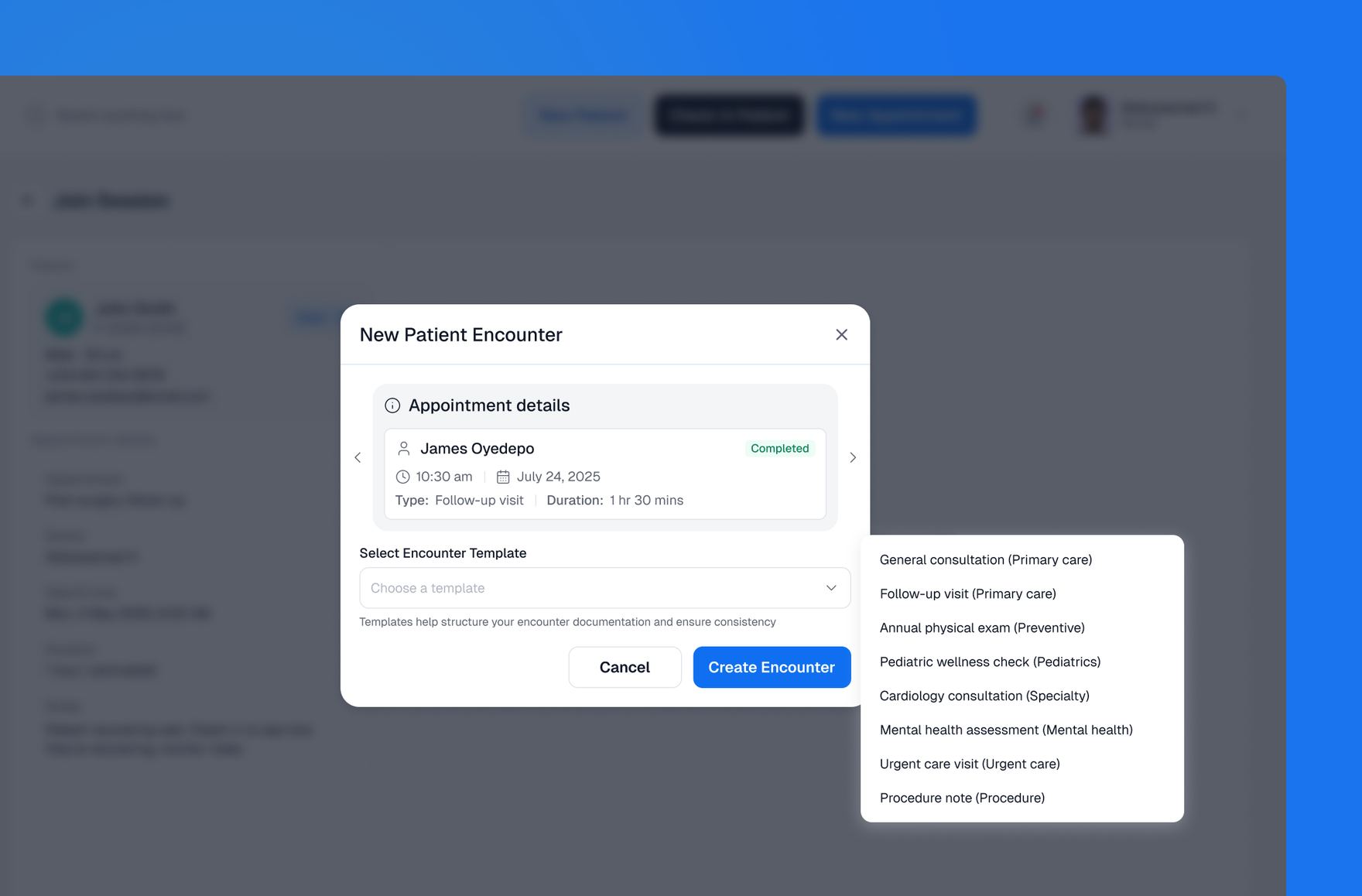
- Structured encounter notes: Instead of a blank text box, the doctor picks a template matched to the visit: general consultation, follow-up, annual physical, pediatric wellness, cardiology, mental health, urgent care, or procedure note. Documentation stays consistent across specialties.
4. Pharmacy & lab, tied to the chart
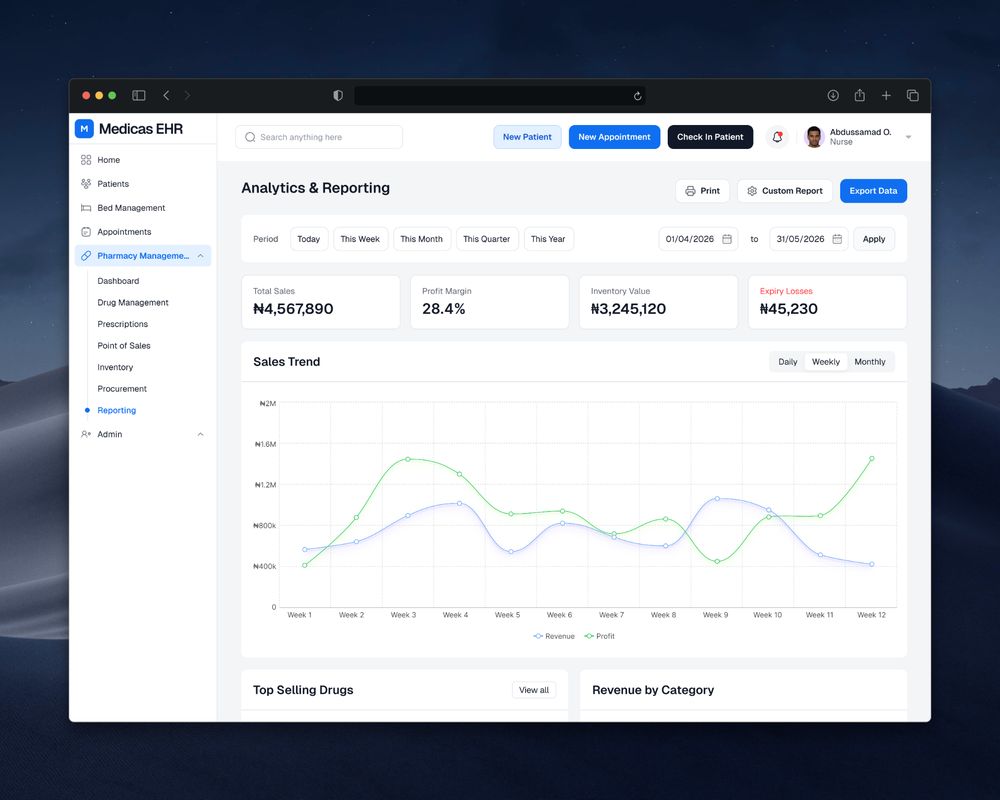
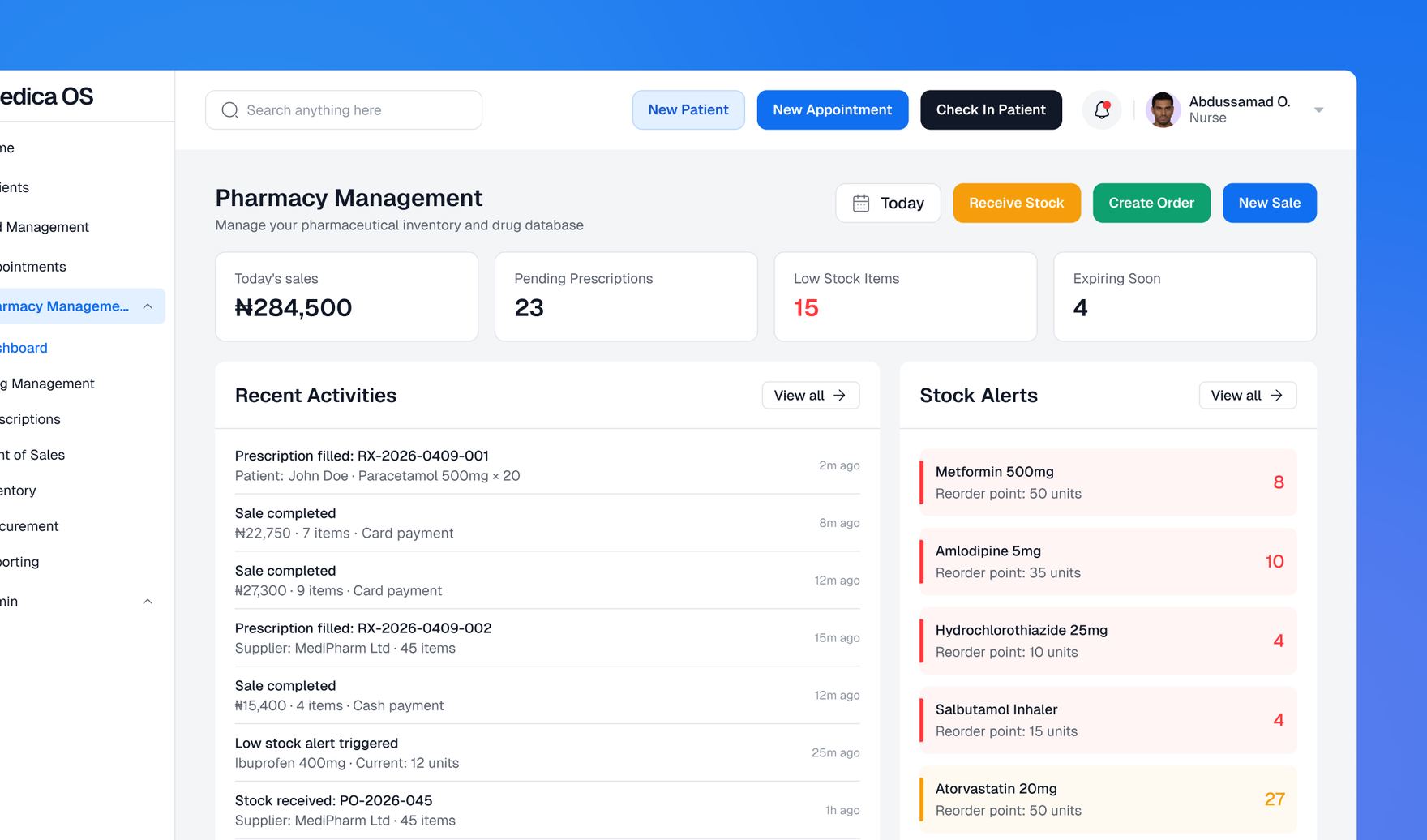
- Stock alerts: Pharmacy flags items below their reorder point and drugs approaching expiry before either becomes a problem.
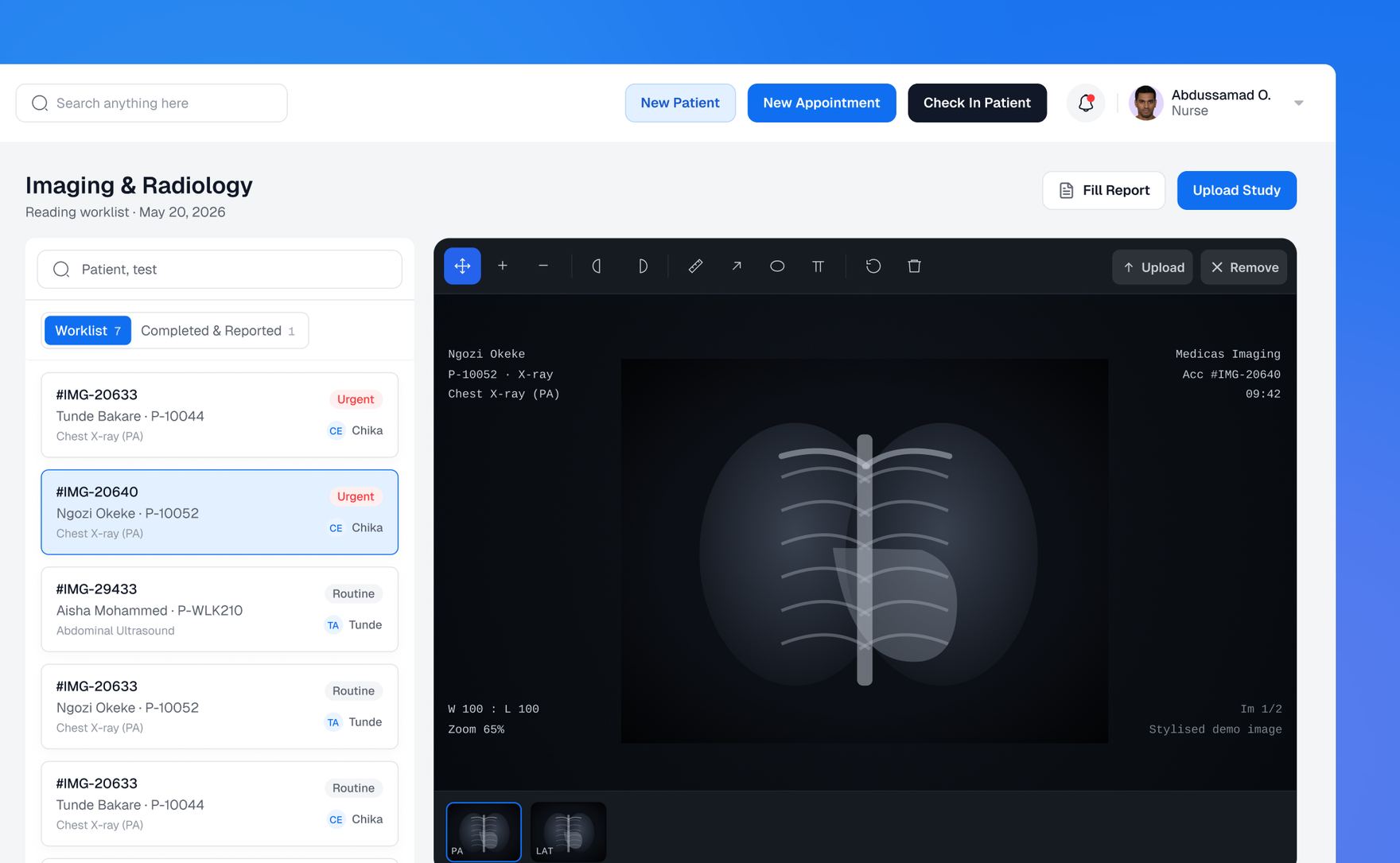
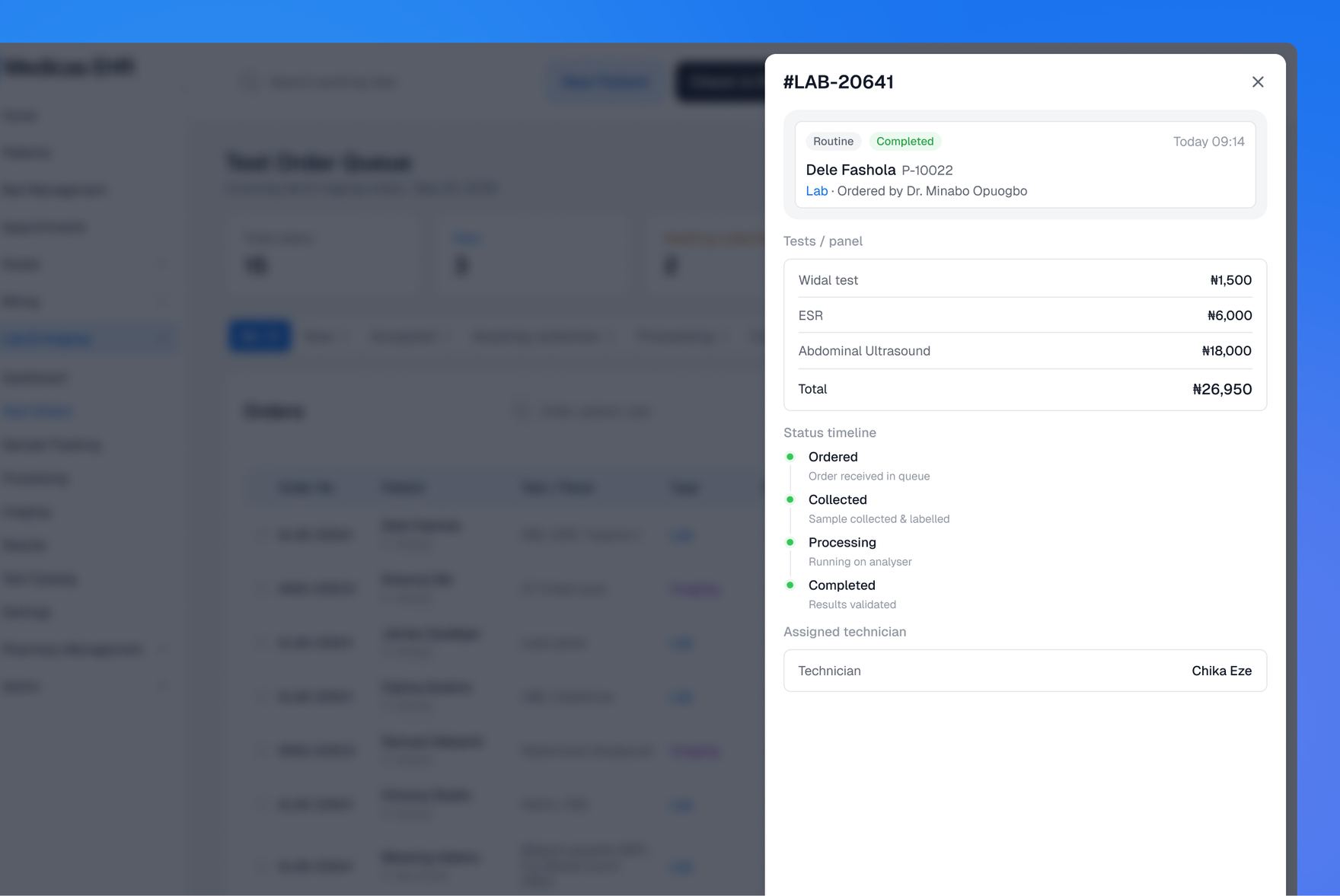
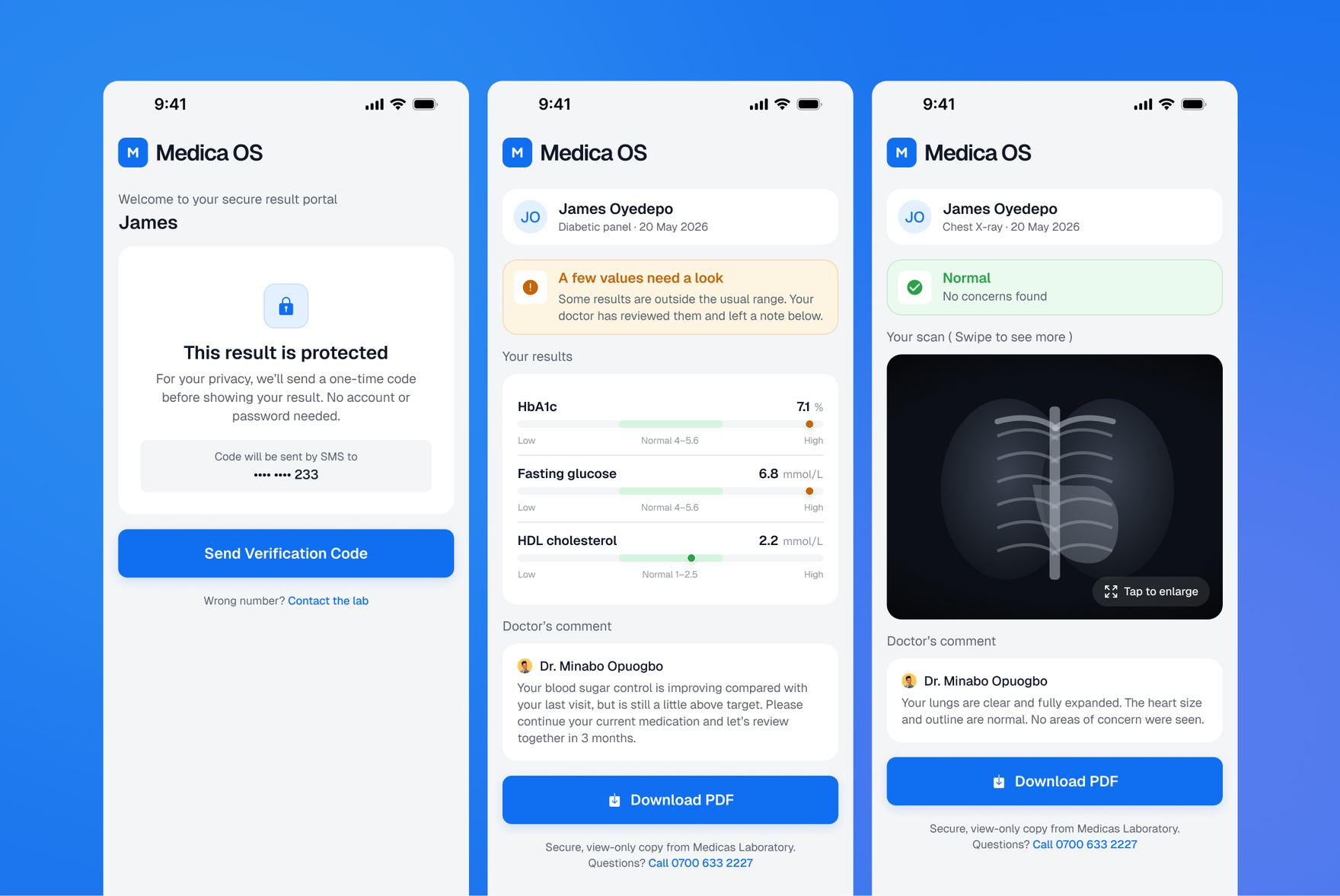
- Lab pipeline: Orders move through pending, in-progress, and completed stages, with turnaround time and critical values surfaced the moment they come in.
5. Billing & insurance
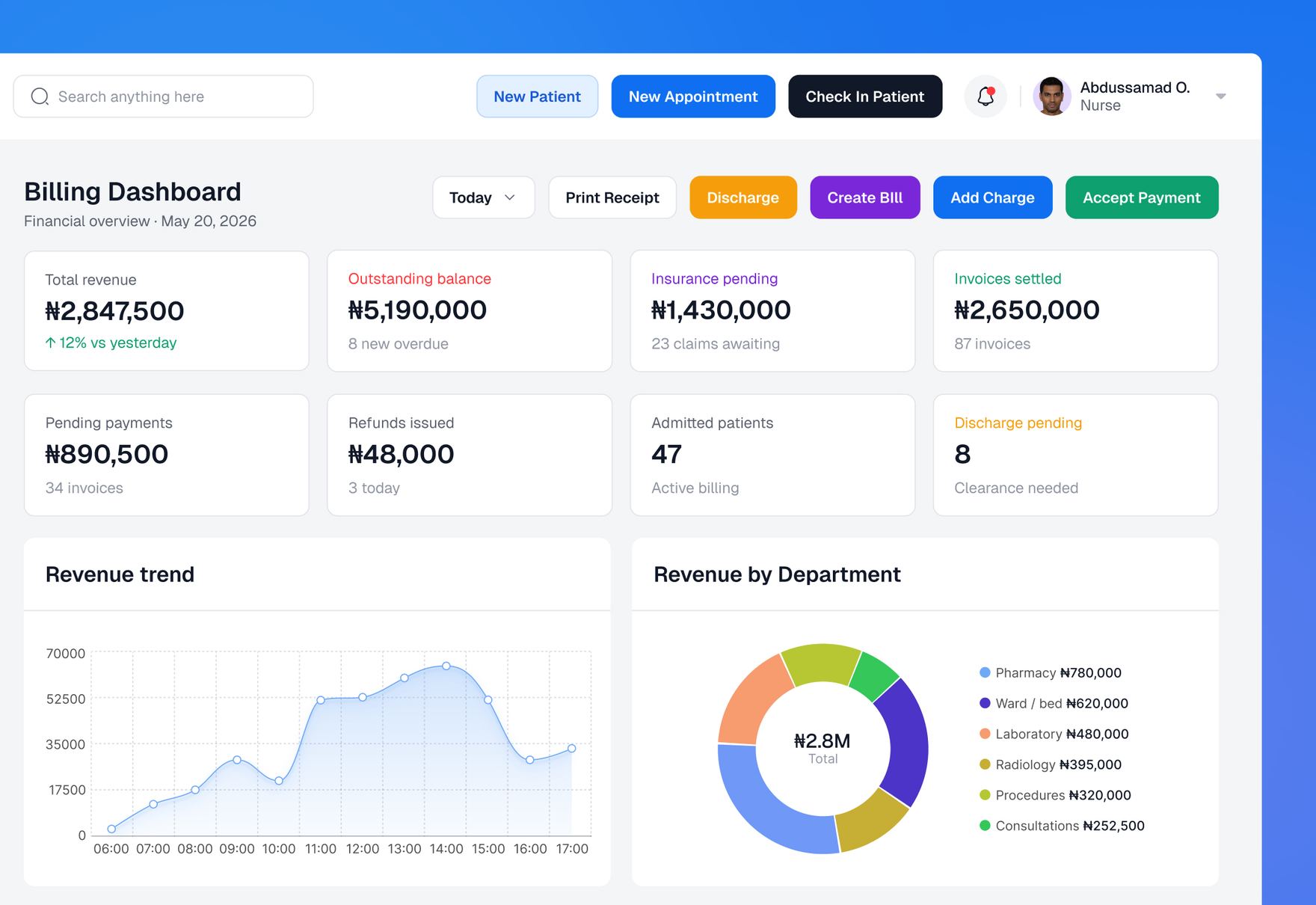
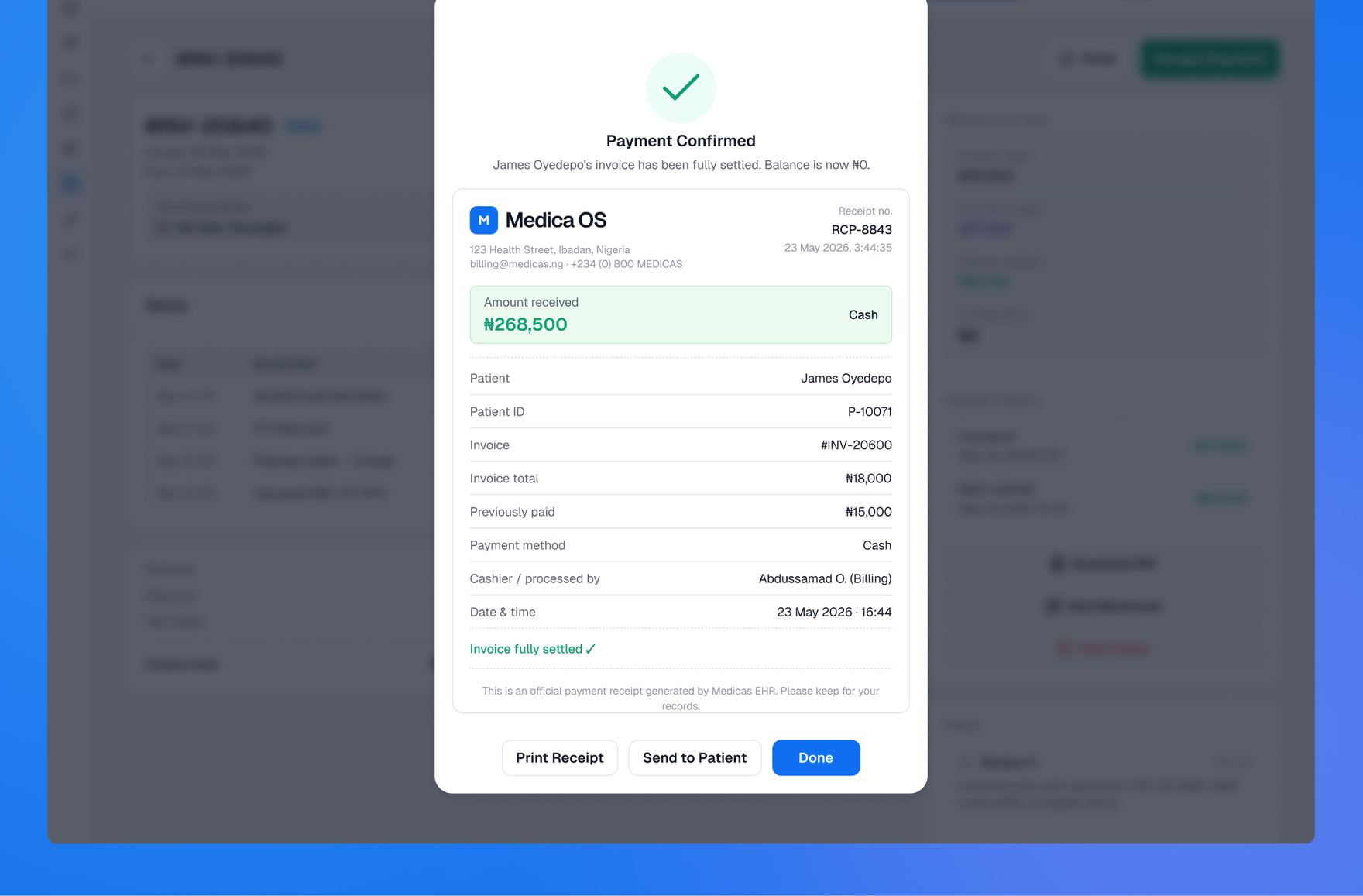
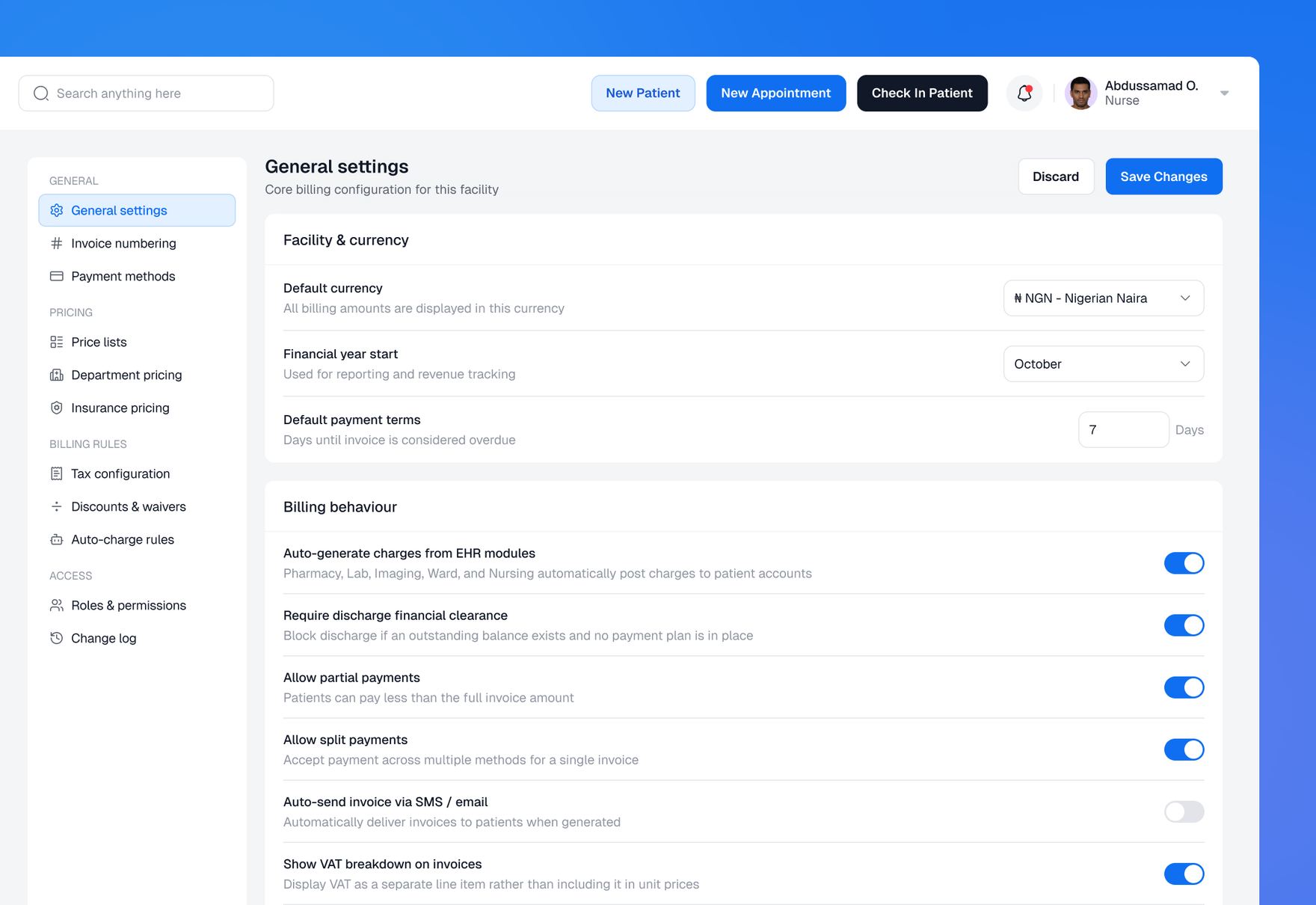
- One financial view: Revenue, outstanding balances, insurance claims, and settled invoices sit on one dashboard, broken down by department.
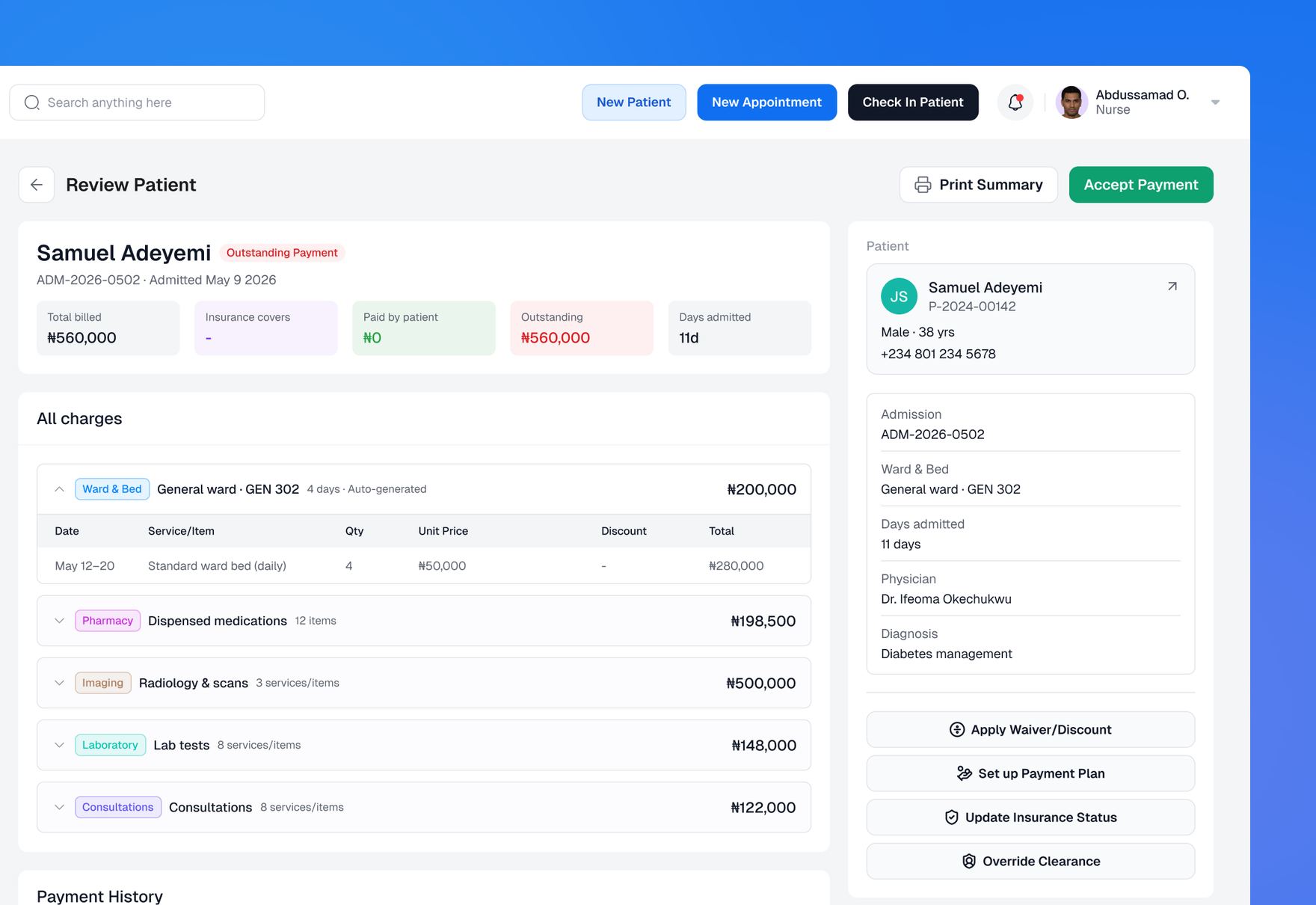
- Charges roll up automatically: A discharge review pulls line items straight from ward stay, pharmacy, imaging, lab, and consultations onto one invoice, tagged by where each charge came from.
- A rule with a visible exception: A patient can't be discharged with an open balance nobody caught, so the system blocks clearance by default. But billing reality is messier than a rule. A family sometimes needs a few more days to pay. Rather than force staff around the rule quietly, a supervisor can override clearance directly, tied to their name and a note explaining why. The exception becomes part of the record instead of a workaround nobody can see later.
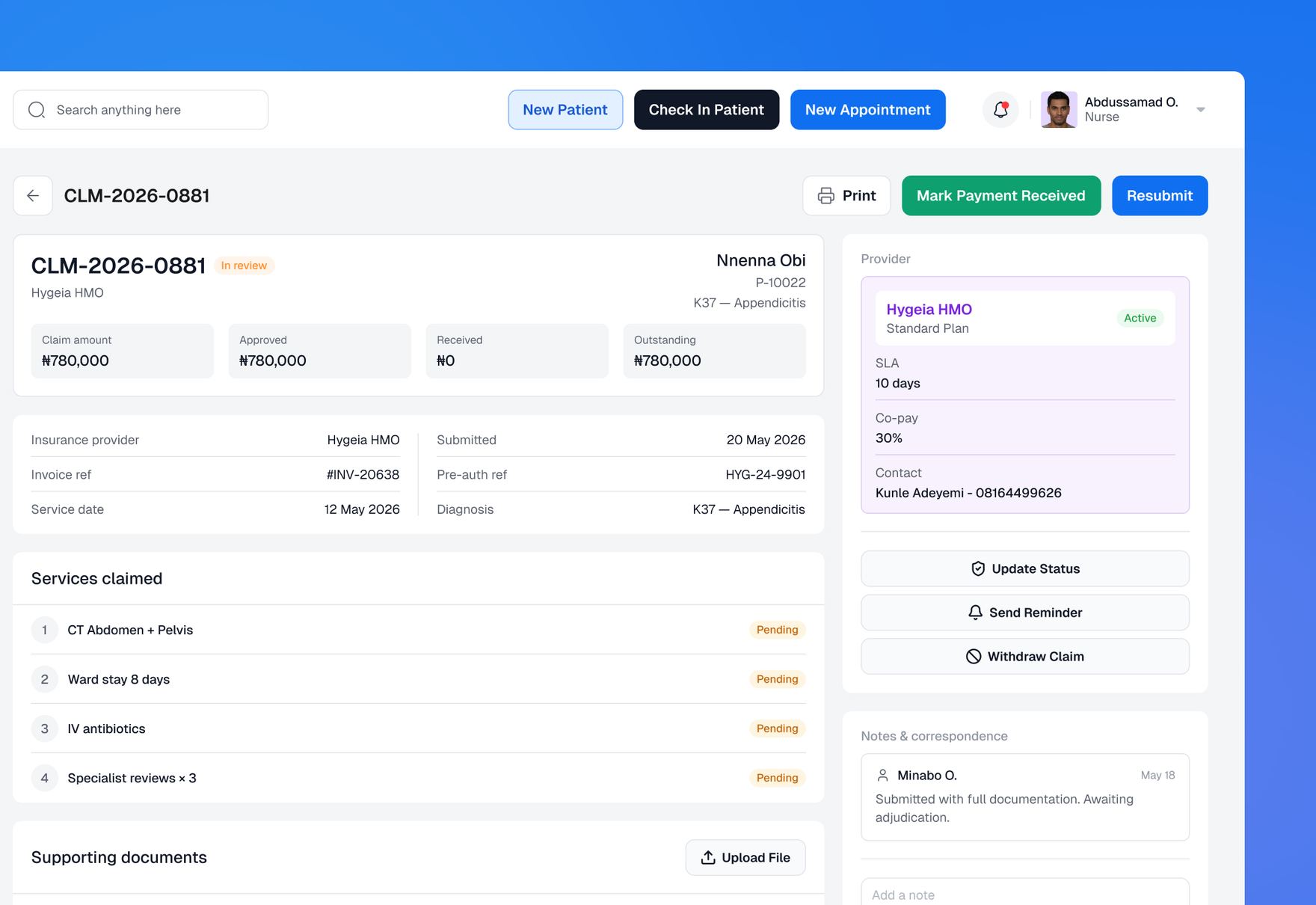
- Insurance, tracked end to end: A pre-authorization request moves into a claims dashboard reconciled by provider (Hygeia HMO, NHIS, AXA Mansard, Leadway Health, AIICO Health), with average settlement time tracked per insurer. From there, a single claim follows its line items to resolution, each service adjudicated on its own status, supporting documents attached directly, and a provider panel carrying the SLA, co-pay, and a named contact to chase when something stalls.
6. Running the practice
- Knowledge base: System guides and clinic-specific policies live in one searchable place, with required reading flagged for new hires and view counts showing what staff actually use.
- Non-clinical work, tracked like engineering work: Outbreak response, compliance audits, and community programs move through a backlog-to-done board with priority flags and owners.
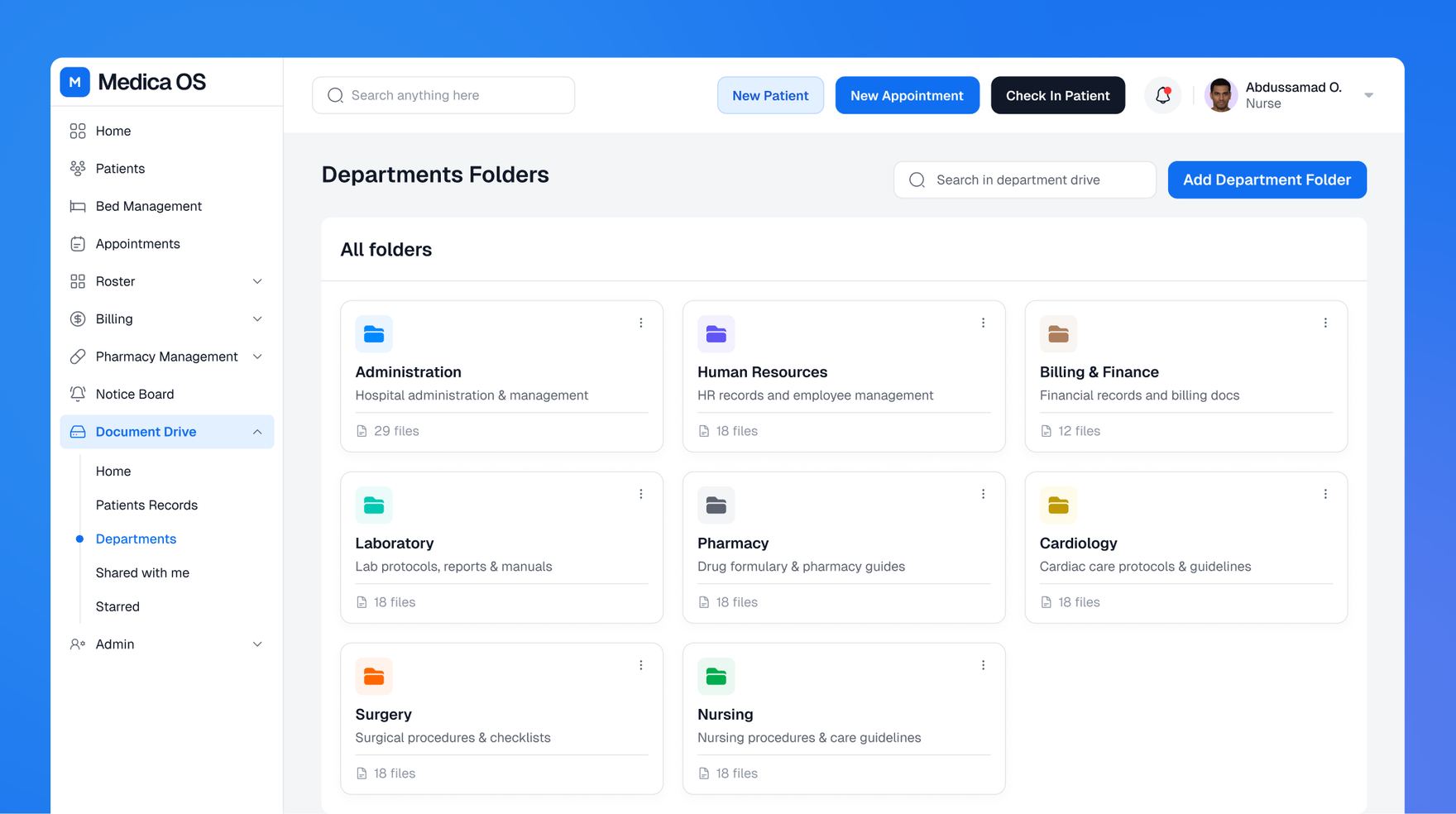
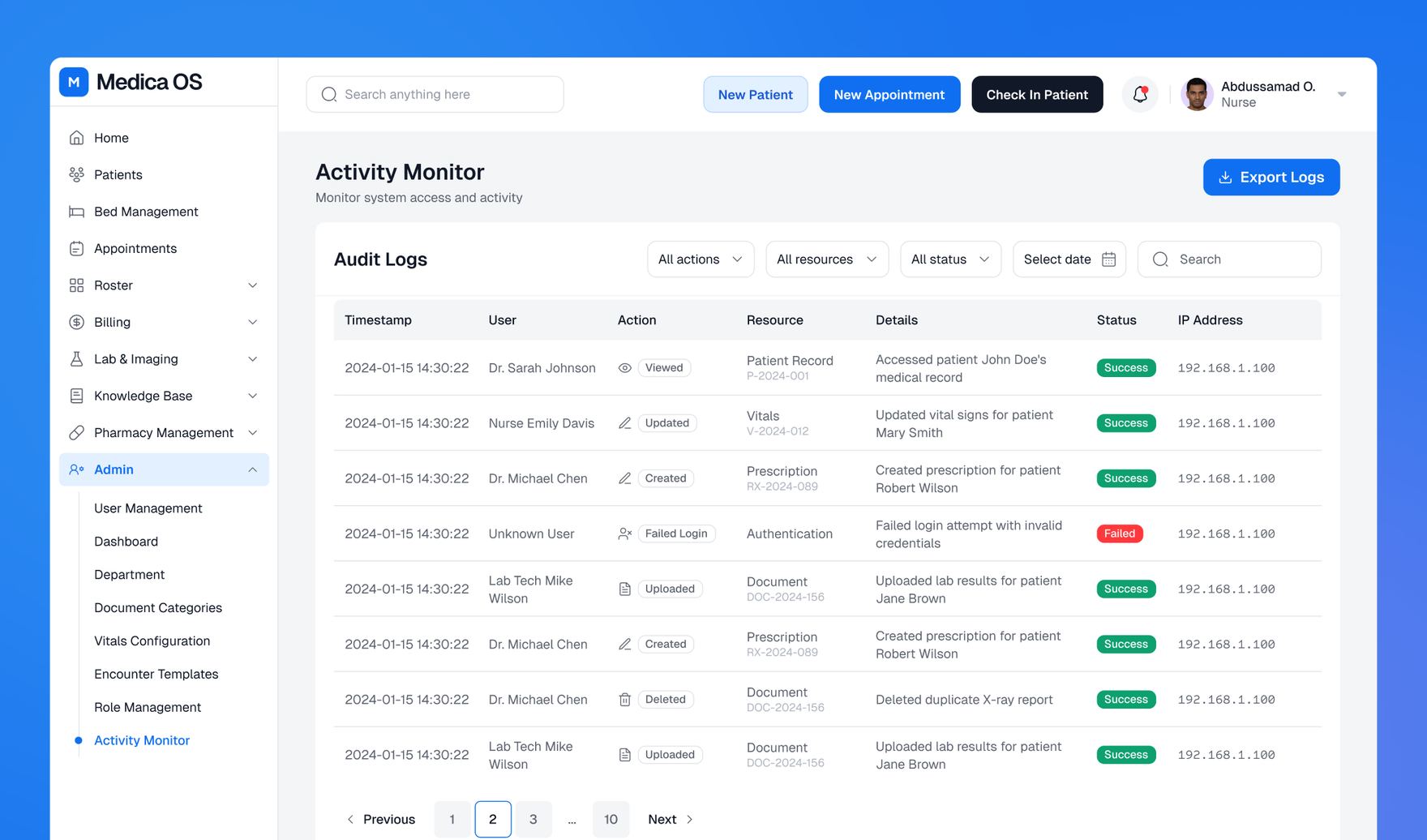
- A user and role console, a shared document drive, and an activity log round out the back office, covering permissions, file storage, and audit trails without a separate login for each.
Learnings
- One source of truth changes behavior: Once bed status, pharmacy stock, and billing pulled from the same data, staff stopped double-checking each other's work over the phone. The system itself became the thing people trusted.
- Specialist views, shared data: Copying the interaction patterns of hotel booking, project management, and fintech tools worked because each department already trusted those patterns from other software. The unfamiliar part was never the interface. It was getting all of it to point at the same record.
- Audit trails are a feature, not a compliance checkbox: Timestamping every clinical, administrative, and financial action matters as much to a pharmacy director chasing a stock discrepancy as it does to an auditor reviewing HIPAA and NDPR compliance.
- Onboarding speed is a design problem: A fast go-live only works if the knowledge base, role permissions, and data import are designed together from day one, not bolted on after the clinical modules ship.